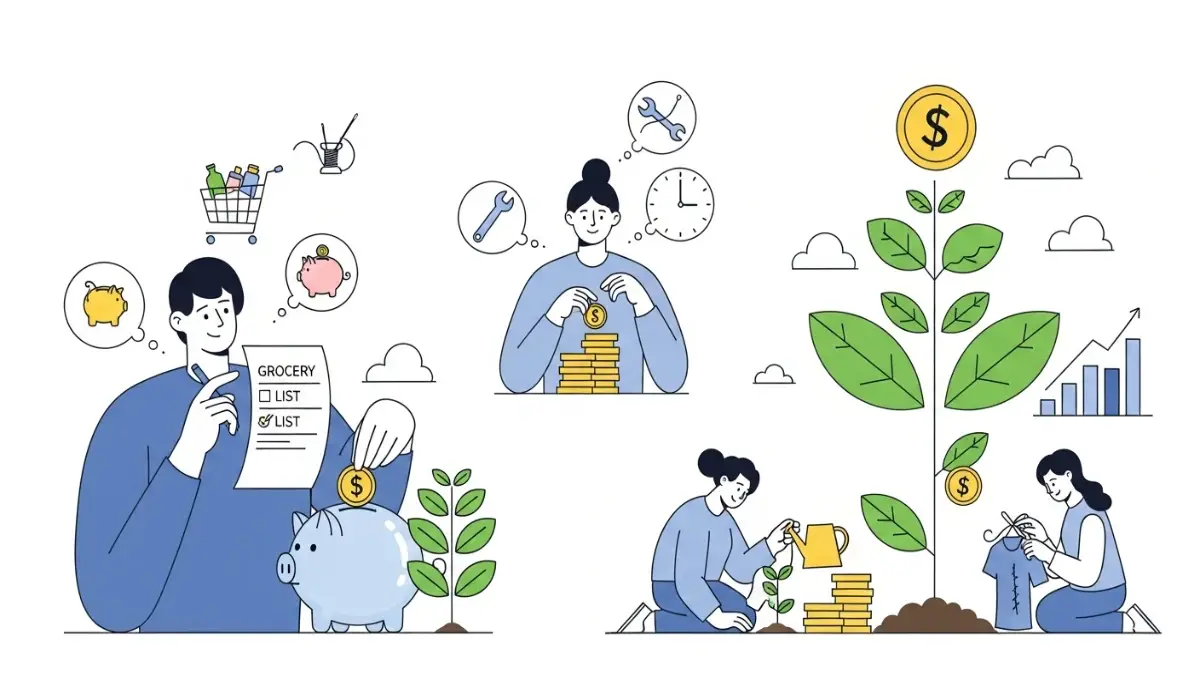
Most advice on “frugal habits” is lazy.
You’ve heard it a thousand times: “Stop buying $5 lattes and you’ll be a millionaire.”
If only it were that simple.
Real frugality isn’t about deprivation; it’s about resourcefulness. It is about diverting money from things you don’t care about to fund the things you do care about.
I have tested dozens of financial “hacks” over the last decade. Most were a waste of time. But these 15 specific frugal habits didn’t just save me a few dollars—they fundamentally changed my relationship with money.
Here is how to stop bleeding cash and start building freedom.
1. The “72-Hour Rule” for Impulse Buys
Amazon made buying too easy. To combat the “one-click” dopamine hit, you need friction.
The Habit: If you see something you want (that isn’t a necessity), wait 72 hours before buying it. Keep it in the cart.
- Why it works: 90% of the time, the emotional urge to buy fades after 24 hours. By day three, you’ll likely delete it.
- Estimated Savings: $500+ per year on clutter.
2. “Shop” Your Pantry First
We often grocery shop on autopilot. We buy pasta because we always buy pasta, even if we have three boxes at home.
The Habit: Before you leave the house, take a photo of your pantry and fridge shelves. Cook based on what you have, not what you crave.
- Pro Tip: Type “recipes with [ingredient 1] and [ingredient 2]” into Google to use up random leftovers.
3. Embrace the “Zero-Spend” Day
This turns saving money into a game rather than a chore.
The Habit: Choose one day a week (like Tuesday) where you spend absolutely $0. No coffee, no gas, no groceries.
- The Mindset Shift: It forces you to plan ahead and get creative with the resources you already possess.
4. Audit Your “Vampire” Subscriptions
A recent study showed the average person underestimates their monthly subscription costs by 2.5x.
The Habit: Print out your last 3 bank statements. Highlight every recurring charge. If you haven’t used it in 30 days, kill it.
- The heavy hitters: Streaming services, gym memberships, and “free trial” apps you forgot to cancel.
5. Calculate Cost in “Hours Worked”
This is the most powerful psychological trick on this list.
The Habit: If you make $20 an hour, and you want a $100 pair of shoes, ask yourself: “Are these shoes worth 5 hours of sitting in a meeting/standing on my feet?”
- The Result: Usually, the answer is no.
6. Drink Water (Exclusively) When Dining Out
Restaurants have the highest markup on beverages—sometimes 400% to 600%.
The Habit: Order the meal you want, but skip the soda, alcohol, or sweet tea.
- The Math: A family of four saves roughly $12–$15 per meal just by drinking tap water. That’s $60 a month if you eat out once a week.
7. Learn Basic Repair Skills
We live in a disposable culture. Frugal people are fixers.
The Habit: Before throwing away a torn shirt or a slow laptop, spend 15 minutes on YouTube searching “How to fix [Item Name].”
- Real example: I saved $300 on a “broken” dryer by watching a 5-minute video that showed me how to reset the thermal fuse.
8. Buy Generic Medicine
This is a secret the pharmaceutical industry hates.
The Habit: Look at the “Active Ingredients” list. The store brand Ibuprofen has the exact same chemical composition as the name brand, but costs 40% less.
- Safety Note: This applies to standard over-the-counter meds. Always consult your doctor for prescriptions.
9. The “One In, One Out” Rule
Clutter costs money. It requires storage, cleaning, and mental energy.
The Habit: You cannot buy a new item unless you sell or donate an equivalent item you already own.
- Why it changes your life: You stop viewing shopping as a hobby and start viewing your possessions as a curated collection.
10. Use Cash for “Problem Categories”
Credit cards make spending feel painless. Cash is physical; seeing it leave your hand hurts (in a good way).
The Habit: If you struggle with overspending on groceries or entertainment, withdraw that exact amount in cash at the start of the month. When the envelope is empty, the spending stops.
11. Stop Buying Convenience Foods
Pre-cut fruit, shredded cheese, and individual snack packs carry a “laziness tax.”
The Habit: Buy the block of cheese and shred it yourself. Buy the whole watermelon. You pay for the food, not the processing.
12. Use the Library (Digital Edition)
Libraries aren’t just for dusty books anymore.
The Habit: Download apps like Libby or Hoopla. Connect your library card to get free audiobooks, Kindle books, and even movies instantly on your phone.
- Savings: Audible subscription ($15/mo) + Kindle books = hundreds saved annually.
13. Automate Your Savings
Willpower is a limited resource. Don’t rely on it.
The Habit: Set up an auto-transfer on payday. Move money to savings before you see it in your checking account.
- The Concept: “Pay yourself first.” You learn to live on what’s left over.
14. Unsubscribe from Marketing Emails
Retailers hire psychologists to write emails that trigger your “Fear Of Missing Out” (FOMO).
The Habit: Go to your email inbox right now. Search “unsubscribe” and mass-delete yourself from retail lists.
- Why: If you don’t know the sale is happening, you won’t spend money to “save” money.
15. Pack Your Lunch (The Compound Effect)
It’s the oldest tip in the book because it works.
The Habit: Dinner leftovers are tomorrow’s lunch.
- The Math: Spending $15 on lunch daily is $3,900 a year. Packing lunch costs maybe $1,000. That is a $2,900 raise just for putting food in a container.
The Bottom Line
Frugality isn’t about being cheap; it’s about prioritizing.
Every dollar you save on things that don’t matter is a dollar you can invest in things that do—like a home, early retirement, or travel.
Which of these habits will you start today? Pick just one, stick with it for 30 days, and watch your bank account grow.
