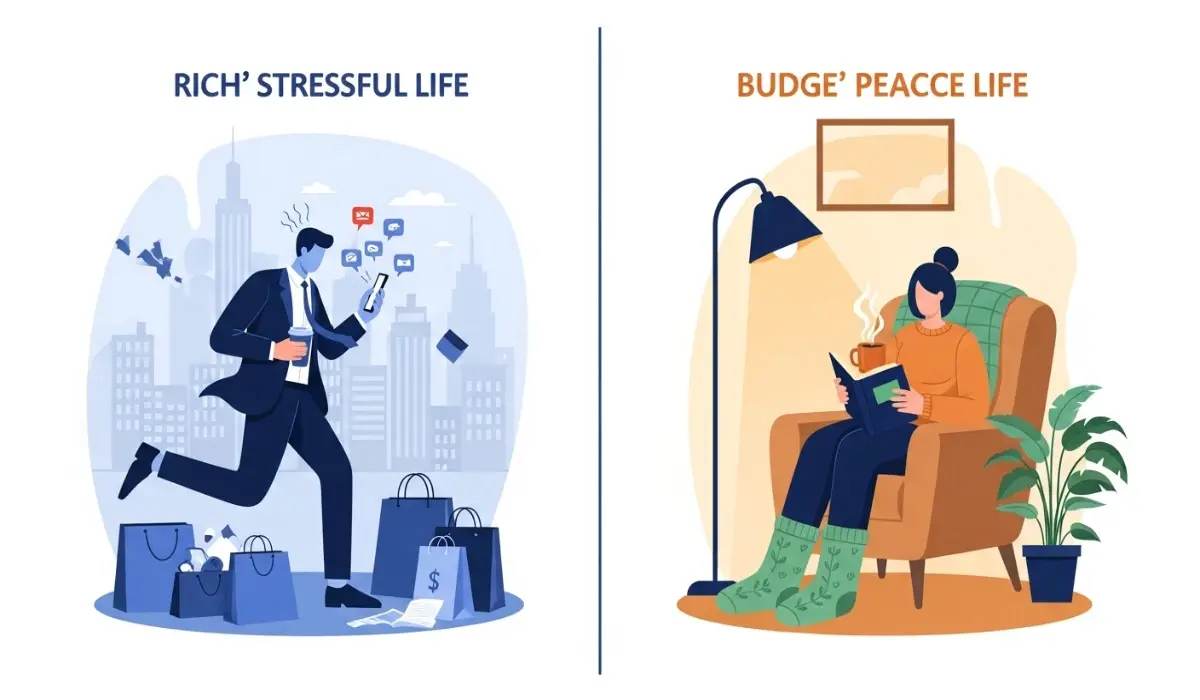
Being broke is a math problem. “Feeling poor” is a mindset problem.
You can have $100,000 in the bank and live in a messy, stressful home eating fast food. You can also have $100 in the bank and live in a clean, peaceful sanctuary eating home-cooked risotto.
Living on a tight budget doesn’t mean you have to suffer. It just means you have to be more creative than rich people.
When you stop trying to mimic the wealthy (buying cheap knock-offs) and start defining your own version of quality, life gets better instantly. Here is how to hack your lifestyle to feel expensive while spending almost nothing.
The “Rich Life” Cheat Sheet (Quick Summary)
- Focus on Lighting: Warm lamps make a $500 apartment look like a $5,000 loft.
- Upgrade Rituals: Replace $6 Starbucks with a high-quality home brewing setup.
- The “Third Place”: Use public libraries and parks as your personal living room.
- Plate Your Food: Presentation makes rice and beans feel like a gourmet meal.
1. Master the Art of “Ambiance” (Lighting & Scent)
Have you ever noticed that luxury hotels don’t have expensive furniture—they just have incredible lighting and a specific smell?
“Feeling poor” often comes from harsh, overhead lighting and clutter. You can fix this for under $20.
- The Lighting Rule: Never turn on the “Big Light” (ceiling light). Use lamps with warm-toned bulbs (2700K color temperature). This instantly makes your home feel cozy and intentional.
- The Scent Rule: A clean home that smells like vanilla or lavender feels luxurious. Simmer an orange peel and cinnamon stick on the stove. It’s cheaper than a candle and smells like a Williams-Sonoma store.
2. Elevate Your “Daily Rituals”
Rich people don’t necessarily have better mornings; they just have slower mornings.
If you are rushing out the door with a piece of toast, you feel chaotic (poor).
- The Fix: Wake up 15 minutes earlier.
- The Upgrade: Buy a French Press ($15 one-time cost) and a bag of decent coffee.
- Starbucks: $6.00/day (Paper cup, rushed, stressed).
- Home Ritual: $0.40/day (Ceramic mug, sitting down, silence).
- Result: You save money, but the experience feels significantly richer.
3. The “Plating” Hack (Eat Like a King)
Rice, beans, and eggs are the cheapest food on earth. They are also the staple diet of “poor” living.
But if you go to a trendy brunch spot, they serve a “Grain Bowl” with rice, beans, and an egg for $18. The difference is presentation.
- Don’t: Scoop food onto a paper plate.
- Do: Sprinkle dried parsley or green onions (costs pennies) on top. Wipe the rim of the plate. Drink water out of a wine glass.
- Why it works: We eat with our eyes. When you treat your $2 meal with respect, you don’t feel deprived.
4. Use the Library as Your “Country Club”
If you think the library is just for dusty books, you are living in the past. Modern libraries are free community hubs that offer services rich people pay for.
- Free Entertainment: Many libraries offer free passes to museums, zoos, and state parks (which usually cost $30+).
- Free Digital Content: Cancel your Kindle Unlimited and Audible subscriptions. Use the Libby App with your library card to get thousands of audiobooks and ebooks for free.
- Free Workspace: It’s a quiet, climate-controlled co-working space with fast Wi-Fi.
5. The “Potluck” Social Life
Going out for drinks or dinner is the fastest way to wreck a tight budget. But isolation makes you feel poor.
Flip the script: Become the Host.
- The Strategy: Host a game night or a potluck dinner.
- The Cost: You make a big pot of pasta or chili ($10). Ask friends to bring their own drinks (BYOB).
- The Vibe: Connection happens in living rooms, not in loud bars. Your friends are likely on a budget too—they will be relieved you suggested a free hang-out.
6. Buy High-Quality “Touch Points”
You can’t afford a Ferrari. But you can afford the best socks in the world.
This is the “Micro-Luxury” Strategy. Spend money on the things that touch your skin every day, and go cheap on the rest.
- Splurge: A really good pillow ($40) or a high-quality towel ($20).
- Save: Generic brand ibuprofen, thrift store furniture, older model phone.
When your towel is fluffy and your sleep is good, you feel cared for.
7. Curate Your Social Media Feed
This is a mental health tip, but it impacts your wallet.
If you follow influencers doing “Shein Hauls” or traveling to Dubai, you will feel poor by comparison. This triggers the urge to spend money you don’t have.
- The Audit: Unfollow anyone who makes you feel “less than.”
- The Replacement: Follow accounts about Minimalism, Slow Living, or Gardening. Follow people who romanticize a simple life.
- Check out our guide on [Internal Link: Minimalist Living Tips] to see how owning less can actually feel like more.
Conclusion: It’s About Control
Feeling poor is actually a feeling of helplessness. It feels like life is happening to you.
When you intentionally design your life—curating your lighting, your food plating, and your hobbies—you take back control. You aren’t “broke”; you are strategically frugal.
Start today. Go home, make your bed perfectly, turn on a lamp, and read a book. It costs $0, but it feels like a million bucks.
